
Home>Services>Tankless water heaters
Thinking About Going Tankless? Tankless Water Heater Installation in Artesia, CA
Start the call with the make of the unit and what it shows: an error code, cold streaks, or a trickle of lukewarm water. Or ask whether tankless fits your house at all. A network plumber who services tankless units is lined up, and the first thing they ask about is the gas line.
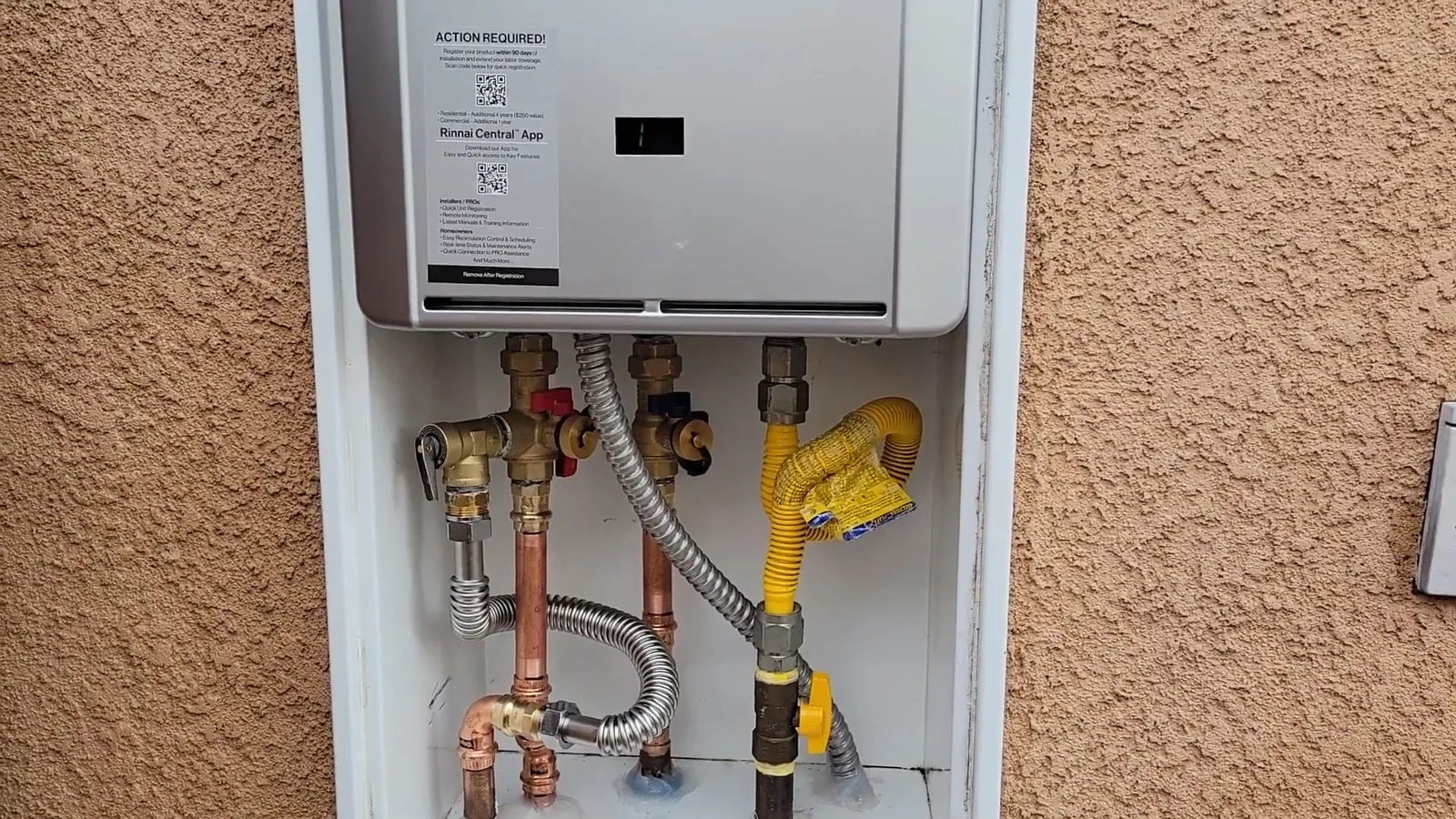
Tankless Water Heater Repair: Error Codes, Cold Streaks and No Hot Water
A tankless heater makes hot water only while water is flowing, so its faults show up as flow problems. The usual complaints are no hot water at all, hot water that cuts to cold for a few seconds, an error code on the display, and water that never gets as hot as it should.
| What you see | Likely cause | Next step |
|---|---|---|
| Error code on the display | The unit has detected a fault, such as ignition, venting or a sensor | Write the code down and call; the manual or manufacturer lists what it means |
| Cold streaks in a shower | Flow too low for the unit to fire, or scale in the heat exchanger | Check flow at the fixture; a plumber checks and descales |
| Lukewarm water at full flow | A demand larger than the unit can supply, or a partly blocked exchanger | A plumber checks gas pressure and the unit's rated capacity |
| No hot water, unit silent | No power, gas valve closed or a tripped breaker | Check the switch and gas valve; leave gas smells to the gas utility |
Several of these point to a problem that is installed into the house, not a failed part: a gas line that is too small, a vent that is too restricted, or a fixture that does not flow enough to trigger the burner. A tankless repair visit is a good time to ask whether the installation was sized for the load.
Flushing and Descaling a Tankless Heater in Hard Water
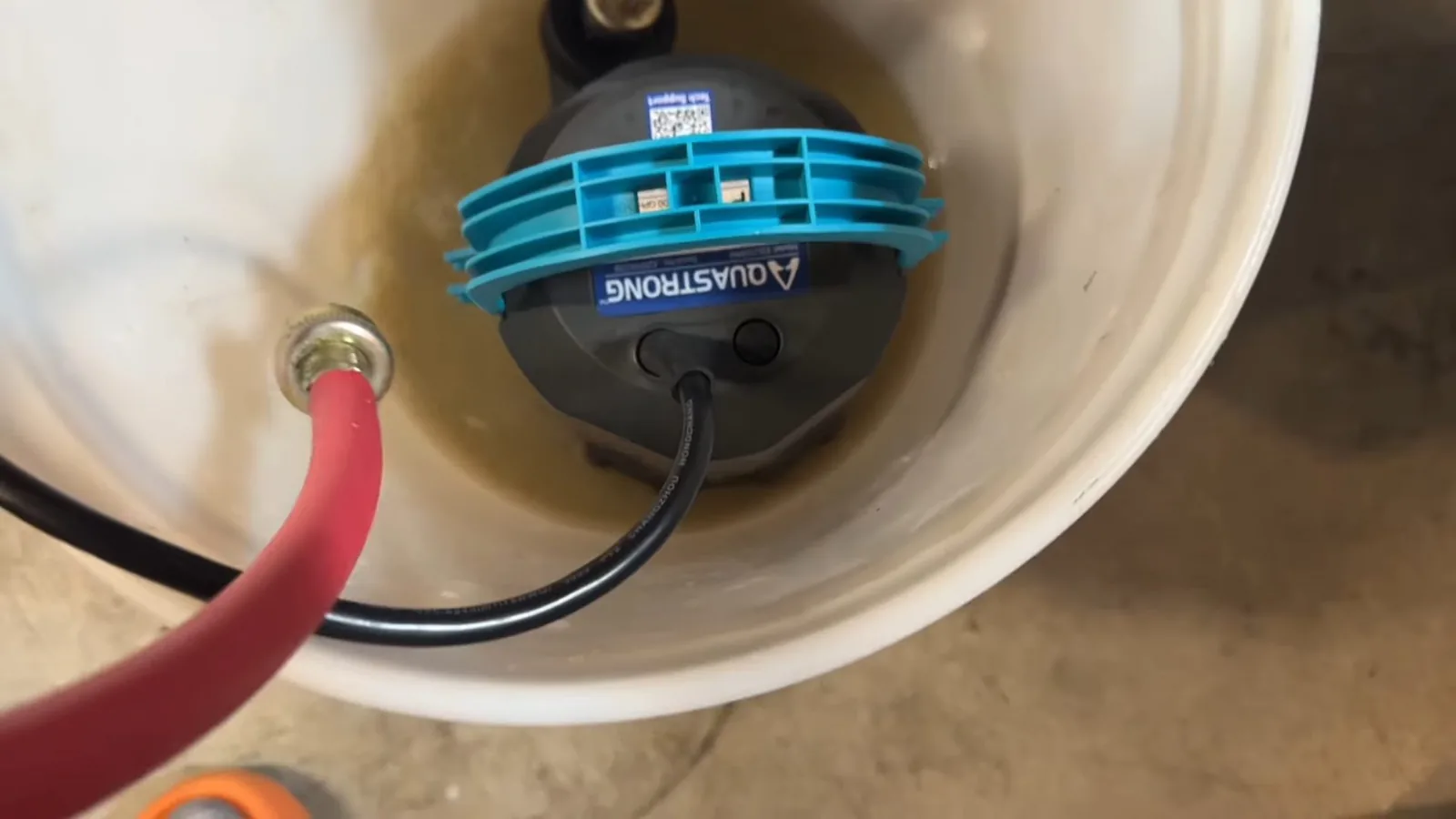
Scale is the main enemy of a tankless heater. Minerals deposit inside the heat exchanger as the water is heated, and the passages narrow. The unit works harder, takes longer to reach temperature and eventually throws an error. Descaling flushes a mild acid solution through the exchanger by way of isolation valves, then rinses it. Ask the plumber how often your unit should be descaled and whether the installation includes service valves that make it simple.
- Hot water that takes longer to arrive or runs weaker than it used to
- An error code about flow or temperature that comes back
- Noise from the unit when it runs
- White crusting on fixtures and in the shower, which signals hard water in general
- A unit with no service valves installed, which is harder to flush
Hardness depends on your water supply. Golden State Water's 2025 Artesia report puts hardness at roughly 8 to 16 grains per gallon, near 11 on average. That figure belongs to Golden State's system, so a house on the City of Norwalk's system should ask that utility for its own. At those numbers a tankless unit needs a regular descaling schedule, and a scale filter or softener ahead of it is worth discussing on the water softener installation Artesia page.
Describe when the water goes cold and what the display says. The dispatcher will pass it on.
Tankless Water Heater Installation in Artesia: Gas Line, Venting and Mounting
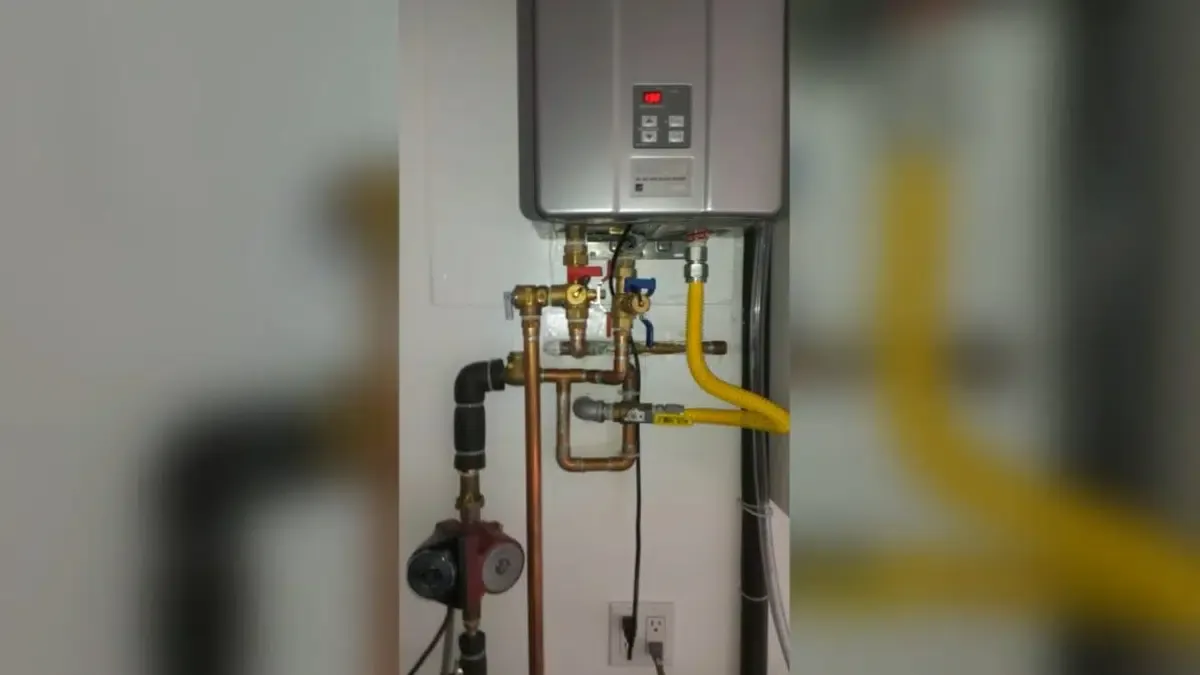
Putting a tankless unit where a tank stood is not a like-for-like swap. A gas tankless unit draws gas at a higher rate than a tank heater, so the line to it may need to be larger. The plumber measures the run, counts the appliances on the line and decides whether the existing pipe is big enough. Gas line sizing, permits and inspections for the work are described on the gas line sizing page.
Venting is the next question. Tankless units use venting that differs from a tank's flue, and the route to the outside may be long. Mounting is the third: most units hang on a wall, so something has to move out of that space. Ask where the unit will be, what moves, how the vent will run and what patching is part of the job.
Artesia's plumbing permit form lists water heaters and low-pressure gas systems, so a tankless installation with a gas change involves permit questions. Find out who pulls the permit; Building and Safety, (562) 865-6262, can say what a gas change requires. Electric tankless units draw heavy current, so ask whether the panel and wiring can take it.
Replacing or Converting From a Tank
Converting from a tank to tankless is a replacement with extra steps: the old tank and its connections come out, the gas line and vent are modified, and the new unit is mounted. If you are replacing an existing tankless unit with a new one, the work is usually simpler, because the gas, vent and mounting are already in place. In both cases ask the plumber to walk through what changes, what stays and what the inspection will cover. The tank side of that comparison is on the replacing a tank heater page.
Tankless or Tank: Where Each One Fits
Gas or electric is the first question, because it decides the install work. A gas unit needs the gas line and vent described above. An electric unit needs panel capacity and heavy wiring. Brand is the second: ask for the brand and model, because parts availability and descaling instructions differ, and the maker's manual is the reference for service. As for the choice between a tankless unit and a tank, a house that already has a large gas line and a good vent route is easier to convert than one where both would need work.
Also handled: gas and electric units, brand questions, and comparing tankless with a tank.
Tankless Water Heater Questions, Answered
Is tankless better than a tank water heater?
Neither is better for every house. Tankless gives hot water on demand and does not store it, but it costs more to install and needs descaling in hard water. A tank is simpler to install and to repair. The house's gas line, vent route and wall space often decide it.
How do I compare a tankless unit with a tank in Artesia?
Compare the installed work, not only the unit: gas line size, venting, wall space, permit and any electrical changes. Ask for both options quoted the same way, and ask how hard water will affect each one.
What does a tankless water heater need to work properly?
Enough gas or electricity at the right size, a vent that runs correctly to the outside, a minimum flow at each fixture, and regular descaling. If any of those is missing, the unit will show faults even though the heater itself is fine.
How do I flush or descale a tankless heater?
The plumber closes the isolation valves, connects hoses and pumps a descaling solution through the heat exchanger, then rinses it. It is not a casual job with the wrong solution or a missing valve, so ask your plumber to do it and note the date.
Tankless Questions or Trouble? Call the Dispatch Line
Give the dispatcher the model, the error code if there is one, and whether the unit runs on gas or electricity.
Call (562) 271-1710